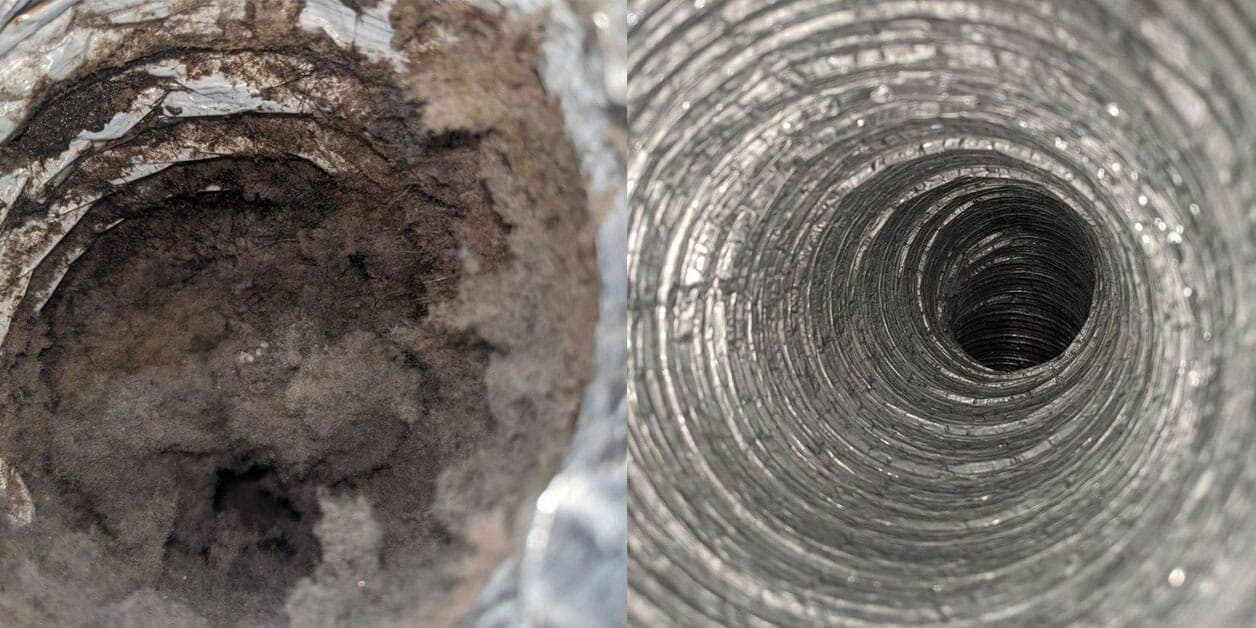
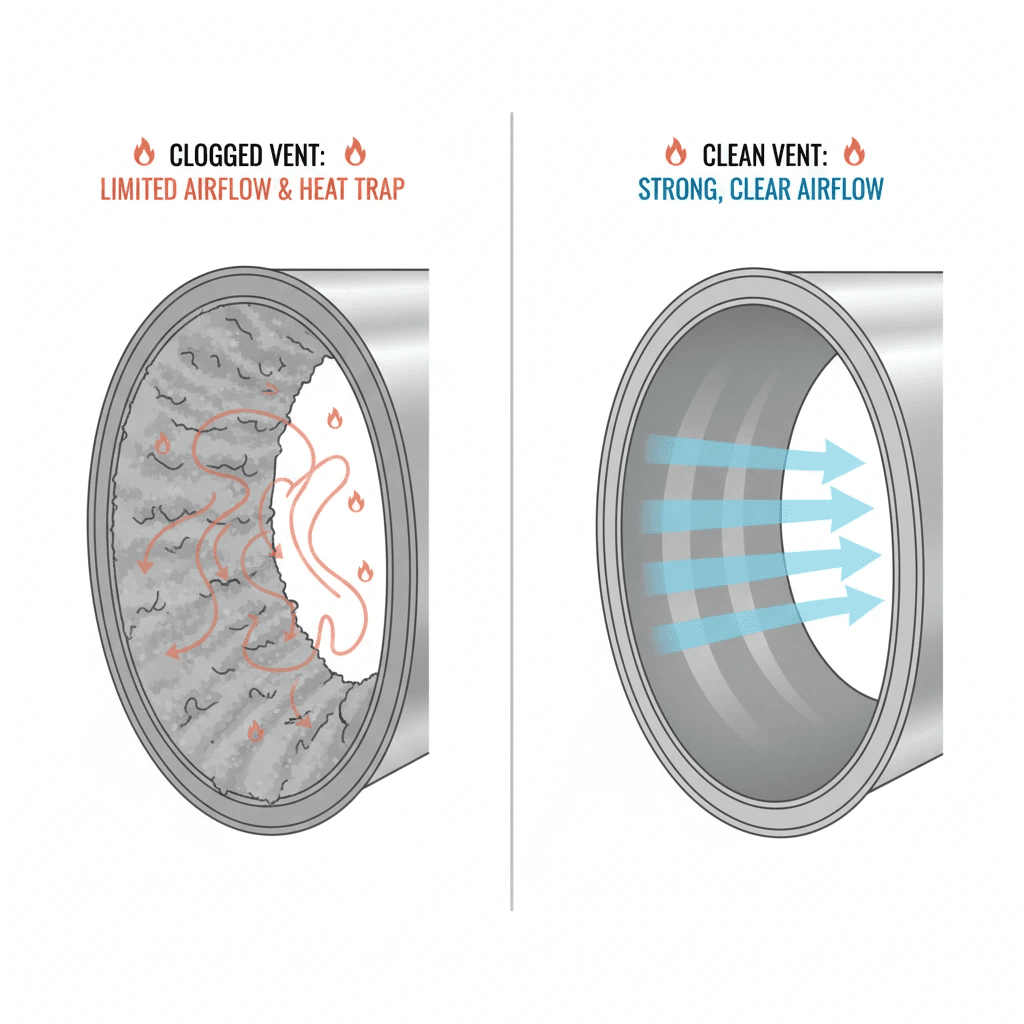
It's a serious fire hazard
Start with the number that matters most: dryer fires are one of the most common and most preventable house fires, and a blocked vent is the leading cause. Lint is not just fluff — it's a fine, loosely packed fiber that ignites easily and burns fast. When it accumulates inside a duct that runs right past a heating element, you have the two ingredients of a fire sitting inches apart, every single time you run a load.
The risk builds quietly. A little lint escapes the trap with every load — that's normal. But over months, that residue collects along duct walls, at bends and joints, and especially at the exterior vent hood, where it can be compressed by outside airflow into a dense, felted plug. Once airflow is restricted enough, heat that would normally vent outside starts building up inside the duct instead.
That's the mechanism behind the vast majority of dryer fires: an overheating event inside a lint-packed vent, often when nobody is home or paying attention because the dryer is 'just doing its normal cycle' — except its normal cycle now runs hotter and longer than it was designed to.
The fix is not complicated. Routine cleaning removes the buildup before it becomes a hazard. It is the single highest-leverage thing a homeowner can do to reduce dryer fire risk, and it's the reason this service exists.